February 2, 2026
Vectorise Definition
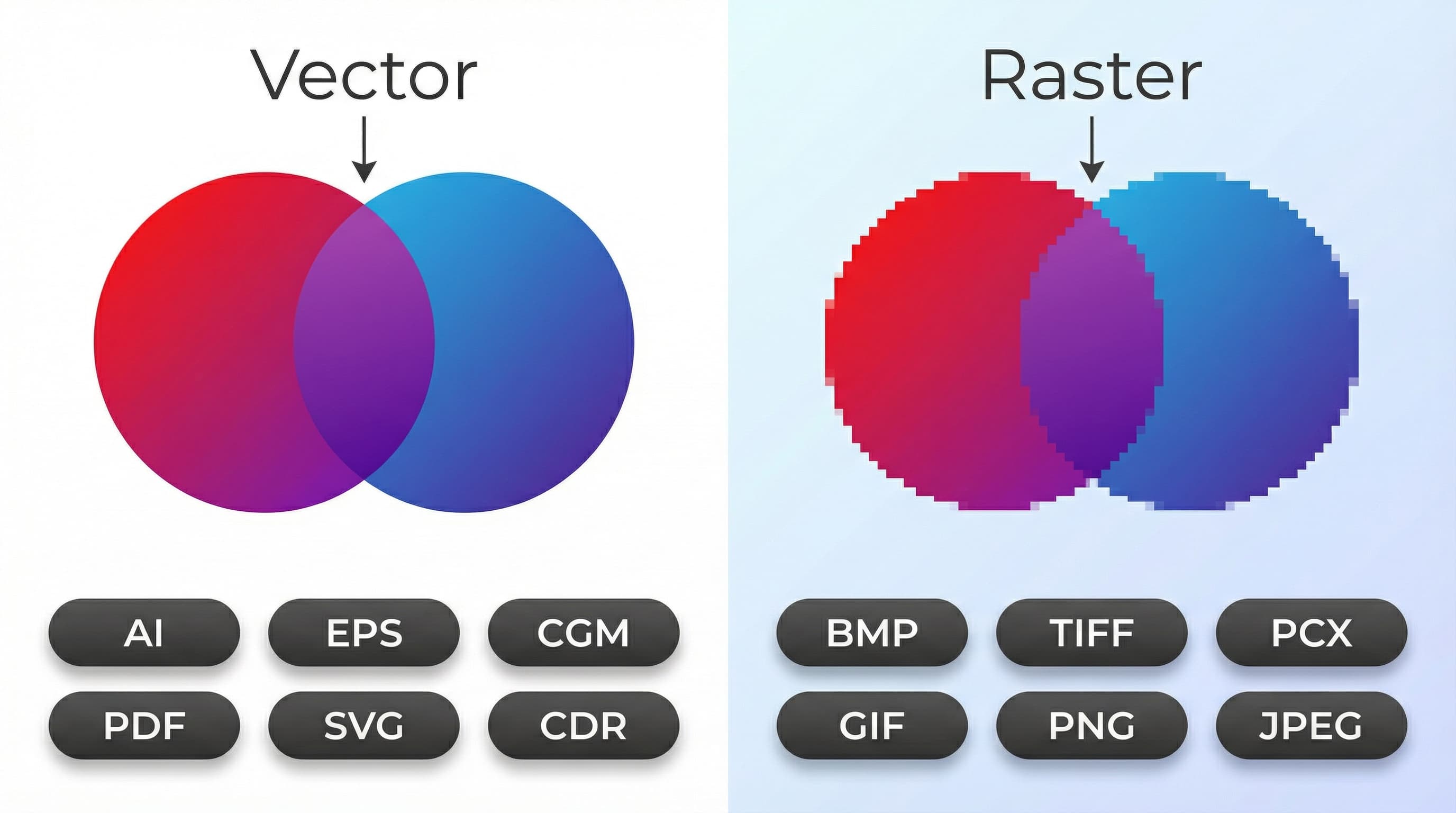
Vectorise (or vectorize in American English) is a verb used in mathematics, computing, data science, and graphic design. It means to convert something into a vector form for mathematical, computational, or graphical processing.
In simple terms, to vectorise something is to represent data, operations, or images in vector form so they can be processed efficiently or scaled without losing quality.
What Is the Definition of Vectorise?
Vectorise means to transform data, functions, computations, or images into vector form to enable efficient mathematical, computational, or graphical processing.
The meaning slightly changes depending on context:
In mathematics, vectorise means expressing a quantity or operation as a vector.
In computer programming, vectorise means replacing element-by-element loops with vector operations.
In machine learning, vectorise means converting text, images, or signals into numeric vector representations.
In graphic design, vectorise means converting raster images like PNG or JPEG into scalable vector graphics (SVG).
Vectorise in Mathematics
In mathematics, a vector is a quantity that has both magnitude and direction.
To vectorise in mathematics means to:
Represent a set of values as a vector
Convert a matrix into a column vector
Express scalar relationships in vector form
Example
If you have a matrix:
1 | 2 |
3 | 4 |
Vectorising the matrix creates a single column vector:
1 |
3 |
2 |
4 |
This process is commonly written as vec(A) in linear algebra.
Vectorisation in mathematics is used in:
Linear algebra
Multivariable calculus
Engineering systems
Physics modeling
Vectorise in Programming
In programming, especially in Python (NumPy), R, or MATLAB, vectorising means:
Replacing explicit loops with array-based operations that process multiple values at once.
Non-Vectorised Example (Loop-Based)
Vectorised Example
Vectorised code is:
Faster
More memory-efficient
Cleaner and easier to read
Optimised for CPU and GPU execution
Vectorisation improves performance because libraries like NumPy use low-level optimised implementations written in C.
Vectorise in Machine Learning and NLP
In machine learning, to vectorise means:
Converting non-numeric data into numeric vectors so algorithms can process them.
Algorithms cannot understand raw text or images. They require numerical input.
Example: Text Vectorisation
The sentence:
Cats chase mice
Can be converted into:
Bag-of-Words vectors
TF-IDF vectors
Word embeddings (like Word2Vec or GloVe)
For example:
Word | Value |
|---|---|
cats | 1 |
chase | 1 |
mice | 1 |
Each document becomes a numeric vector.
Vectorisation is essential in:
Natural Language Processing (NLP)
Deep learning
Recommendation systems
Search engines
Image recognition
Image Vectorisation
Image vectorisation is the process of converting a raster image (PNG, JPG, or JPEG) into a scalable vector file (SVG) made of mathematical paths and curves.
Unlike raster images that are built from pixels, vector graphics are built from paths, lines, and Bezier curves defined by mathematical equations.
Raster vs Vector
Raster images:
Made of pixels
Fixed resolution
Lose quality when enlarged
Examples: PNG, JPEG, JPG
Vector images:
Made of mathematical paths
Resolution-independent
Scale infinitely without losing quality
Examples: SVG, AI, EPS
What Happens During Image Vectorisation?
When software vectorises an image, it:
Detects edges and shapes
Identifies color regions
Converts them into paths (Bezier curves)
Outputs SVG path data
Instead of pixels, the file contains path definitions like:
This defines shapes mathematically, allowing infinite scaling without distortion.
When Should You Vectorise an Image?
Creating scalable logos
Preparing print-ready artwork
Designing icons or illustrations
Preparing files for laser cutting or Cricut machines
Photographs with complex detail and gradients do not vectorise cleanly and may produce very large SVG files.
Why Is Vectorisation Important?
Vectorisation improves:
Performance – Parallel computation reduces execution time
Scalability – Large datasets or graphics can scale efficiently
Mathematical clarity – Equations become easier to analyze
Print and design flexibility – Graphics remain sharp at any size
Without vectorisation, modern AI systems and scalable graphic design would not function effectively.
Vectorise vs Vectorize: Is There a Difference?
There is no difference in meaning.
Vectorise → British English spelling
Vectorize → American English spelling
Both refer to the same mathematical, computational, or graphical process.
Final Definition
Vectorise means to convert data, operations, or images into vector form so they can be processed efficiently or scaled without losing quality.
It is a foundational concept in:
Mathematics
Scientific computing
Data science
Artificial intelligence
Graphic design
Understanding vectorisation is essential for modern programming, machine learning, and digital design.